Where does carbon fiber help in robots and automation machines, and which form should I use?
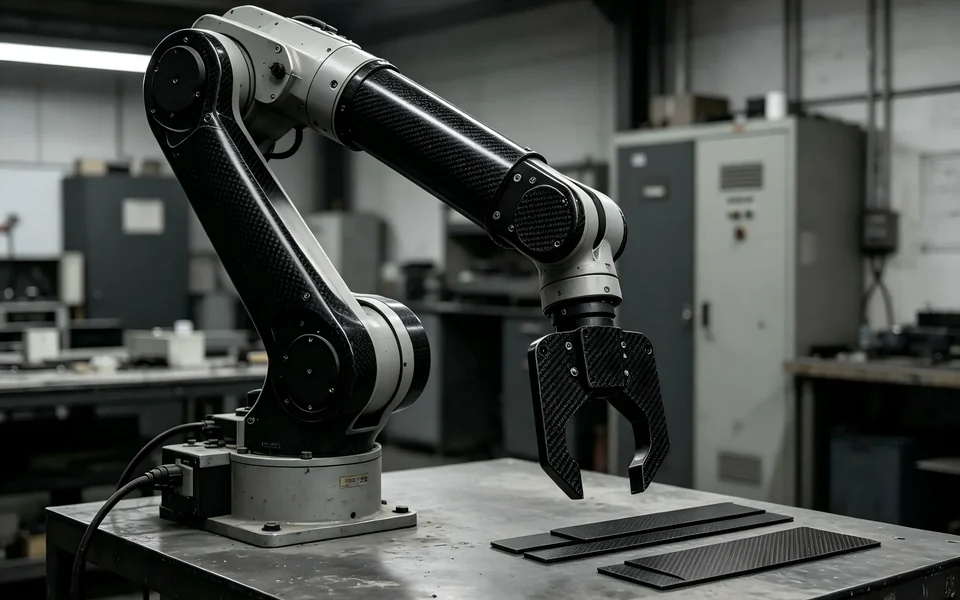
Use carbon fiber on the parts that move fast or must not change size: end-of-arm tooling, gantry and linear-axis beams, robot links, pick-and-place arms and sensor or camera mounts. Lighter moving parts mean less inertia, so motors accelerate faster, settle sooner and run cooler. Unidirectional carbon laminates have about three times the specific stiffness of aluminum[1][2], and carbon barely expands with heat.
Robotics and automation factories are among the buyers of our tubes, sheets and profiles[3].
Which parts benefit, and which form fits?
| Machine part | Why carbon helps | Best form |
|---|---|---|
| End-of-arm tooling (grippers, vacuum frames) | lighter payload, faster moves, smaller robot | square or round tubes, CNC-cut sheet plates |
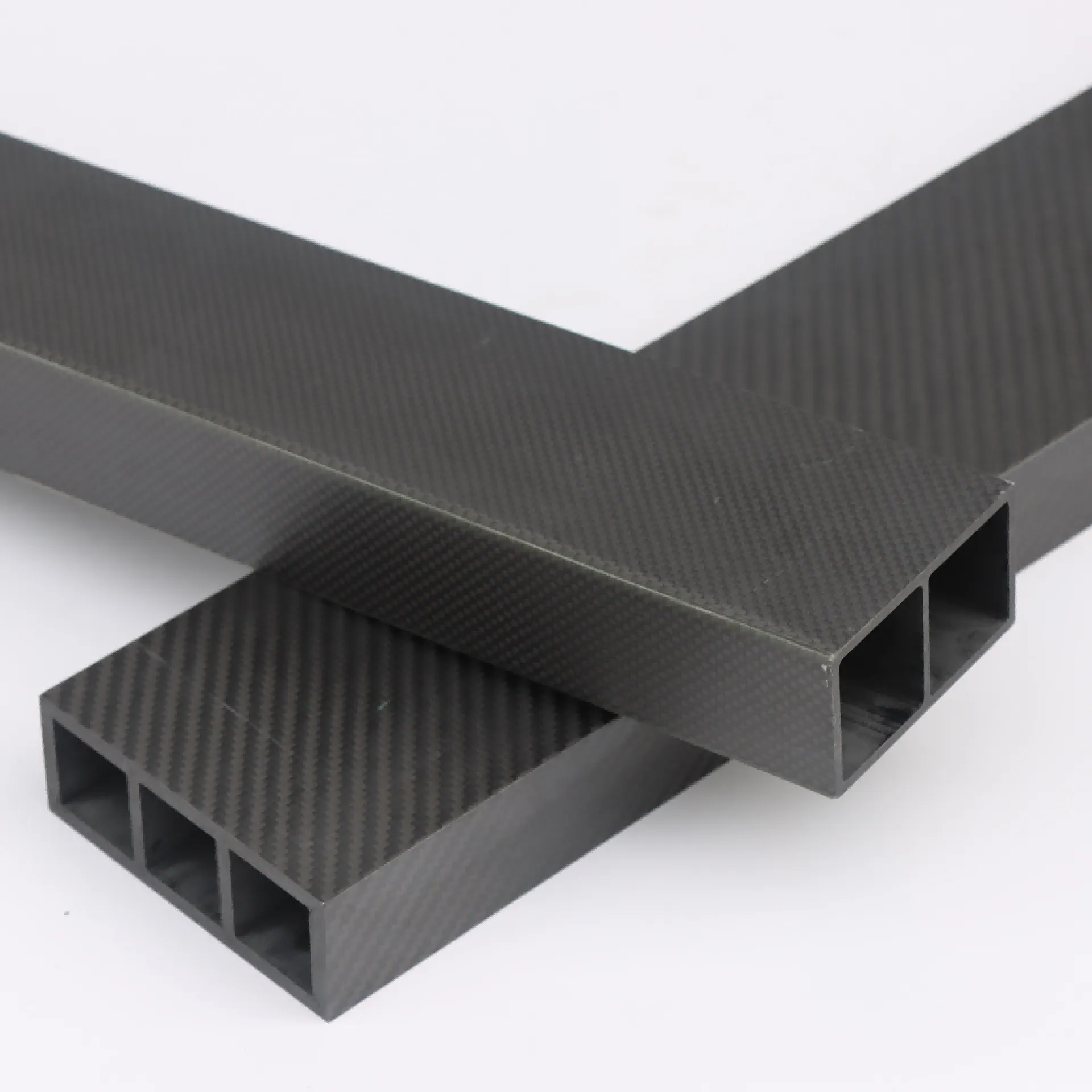
| Gantry and linear-axis beams | less moving mass, less overshoot | large square or rectangular roll-wrapped tubes |
| Pick-and-place and delta arms | very fast cycles | round tubes, pultruded rods |
| Sensor, camera and measuring mounts | stays the same size when temperature changes | sheet plates, square tubes |
| Guards and covers | light and stiff panels | thin sheet |
| Stiffeners on existing parts | adds stiffness with little weight | pultruded strips bonded on |
How much lighter and stiffer?
| Material | Modulus (GPa) | Density (g/cm³) | Specific stiffness |
|---|---|---|---|
| Aluminum | 68.9[1] | 2.7[1] | 25.5 |
| Woven T300 carbon laminate | 55[2] | about 1.6[1] | 34 |
| Unidirectional T300 carbon laminate | 120[2] | about 1.6[1] | 75 |
Specific stiffness (modulus ÷ density)
For beams, ask for tubes with most plies running along the length. That is where the stiffness gain over aluminum is largest. See square or round tube for choosing the section.
Design points for machine parts
- Joints decide the result. Bond aluminum or steel end fittings into tubes, with an isolating layer to stop galvanic corrosion. See joining carbon fiber to metal.
- Use inserts for bolts in thin walls and plates so clamp loads do not crush the laminate.
- Watch the temperature near motors and heaters. Epoxy resins soften near their Tg of 100–130 °C[4].
- Static. Carbon conducts, which helps where static build-up is a problem, but keep it away from live electrical parts.
What to send
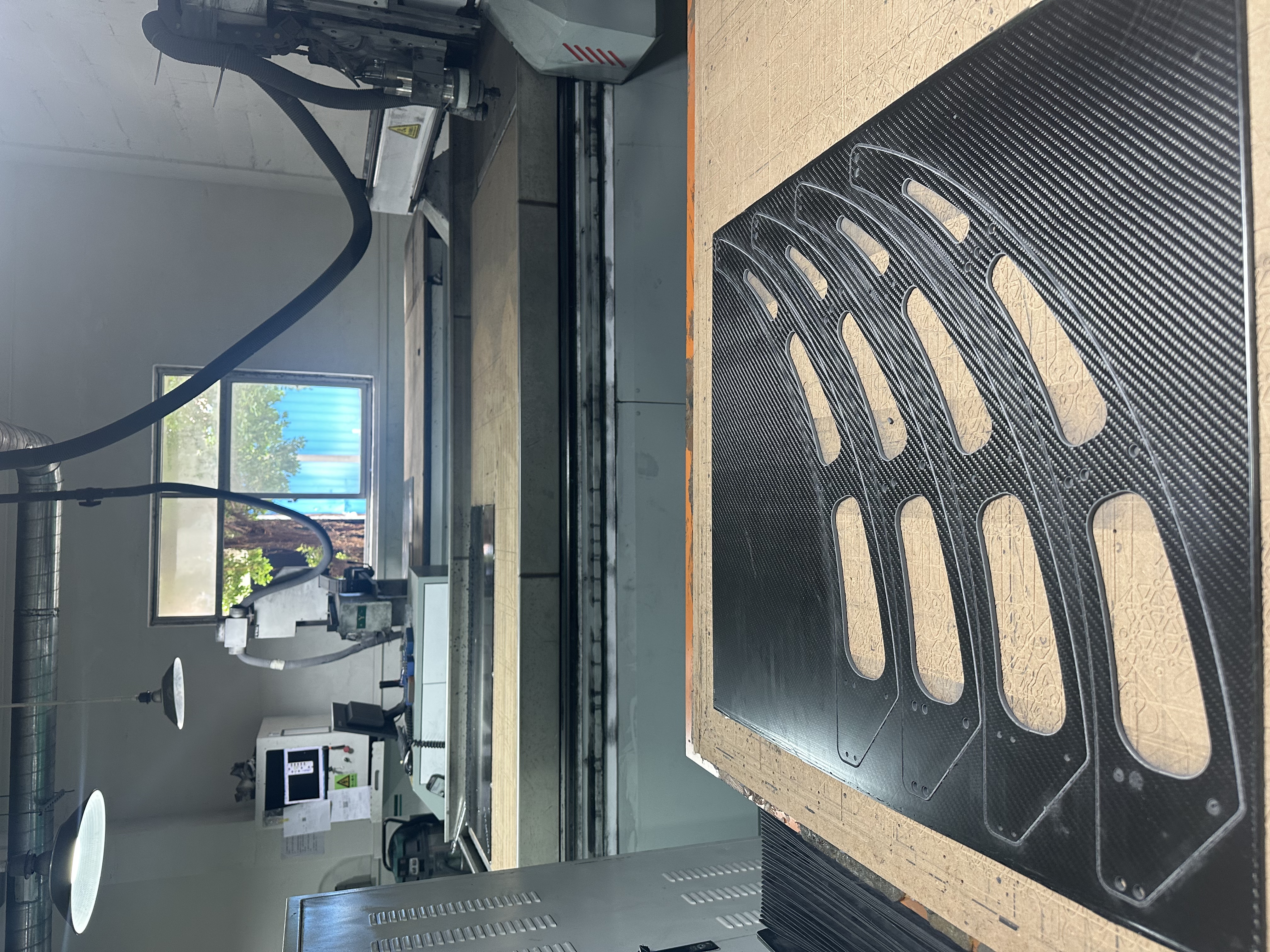
The part drawing (STEP for tubes with end fittings, DXF for plates), the material it replaces, the moving mass you want to reach and the quantity. We can cut, drill and CNC-machine tubes and sheets to the drawing[5]. Use the quote form.
Sources
- DragonPlate, “Carbon Fiber vs Aluminum”: aluminum 68.9 GPa, 2.7 g/cm³; carbon composite about 1.6 g/cm³; aluminum expands about six times as much
- Prepreg technical data sheets: woven T300 laminate modulus 55 GPa; unidirectional T300 laminate modulus 120 GPa (available on request)
- Catalogue: buyers include robotics and automation factories, industrial drone makers and photography-accessory makers
- Prepreg resin Tg 100–130 °C
- Carbon fiber tube: cutting, drilling and CNC machining