Square or round carbon fiber tube: which shape is better for a frame?
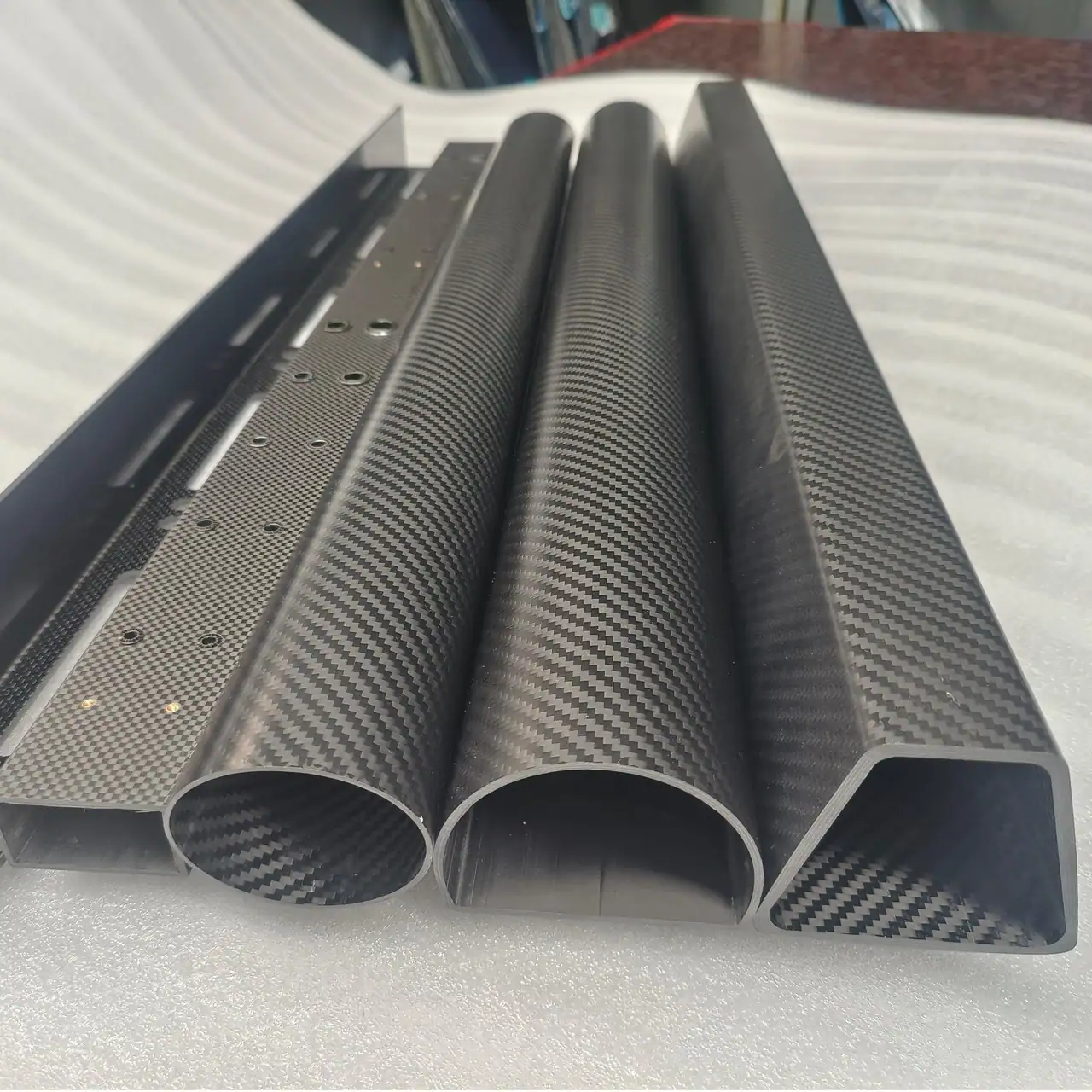
Choose square or rectangular tubes for straight frame members that bend in one known direction and must bolt flat to plates. Choose round tubes for parts that twist, take loads from any side or rotate. At the same 20 mm width and 1 mm wall, a square tube is 1.7 times as stiff in bending as a round tube and weighs 27% more, so it gives about a third more bending stiffness per gram.
How do the two shapes compare in numbers?
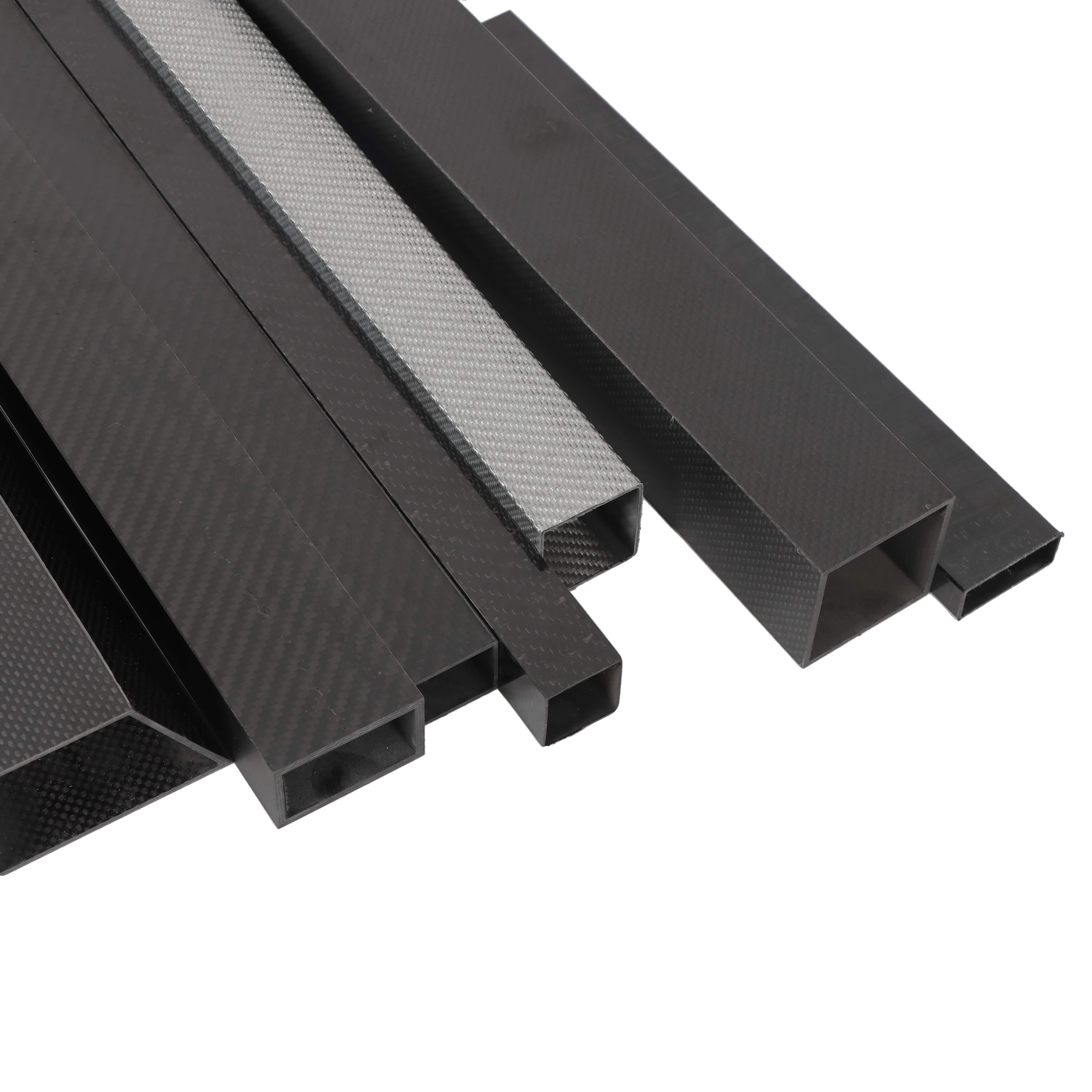
We compared a 20 mm round tube and a 20 × 20 mm square tube, both with a 1 mm wall, using standard section formulas. Material and layup are the same, so only the shape changes.
| 20 mm wide, 1 mm wall | Round 20/18 | Square 20 × 20 | Square ÷ round |
|---|---|---|---|
| Cross-section area (mm²) | 59.7 | 76.0 | 1.27 |
| Bending inertia (mm⁴) | 2,701 | 4,585 | 1.70 |
| Twisting constant (mm⁴) | 5,402 | 6,859 | 1.27 |
| Bending stiffness per gram | 45.3 | 60.3 | 1.33 |
| Twisting stiffness per gram | 90.5 | 90.3 | 1.00 |
Round: I = π(D⁴ − d⁴)/64 and J = π(D⁴ − d⁴)/32. Square: I = (B⁴ − b⁴)/12 and J from the thin-wall formula 4A²t/s. Weight is proportional to area.
Square tube as a multiple of round (same width and wall)
When is a round tube the better choice?
- Torsion and mixed loads. A round tube is equally stiff in every direction and twists as well per gram as a square one, with no corners to concentrate stress.
- Rotating or sliding parts. Rollers, shafts, telescopic sections and handles need a round outside.
- Lowest weight for a given outside size. Where the width is fixed by a clamp or a standard fitting, round is lighter.
- Choice of standard sizes. Our standard round tubes run from 6/4 to 20/18 mm[1].
When is a square or rectangular tube better?
- Frames and gantries that bend mostly in one plane. A rectangular tube put on edge carries even more of its material where the bending is.
- Flat mounting. Brackets, rails, sensors and plates bolt straight onto a flat face, with no saddle clamps.
- Joints. Flat faces give a larger, more even bonding area for glued joints and corner blocks.
Roll-wrapped or pultruded square tube?
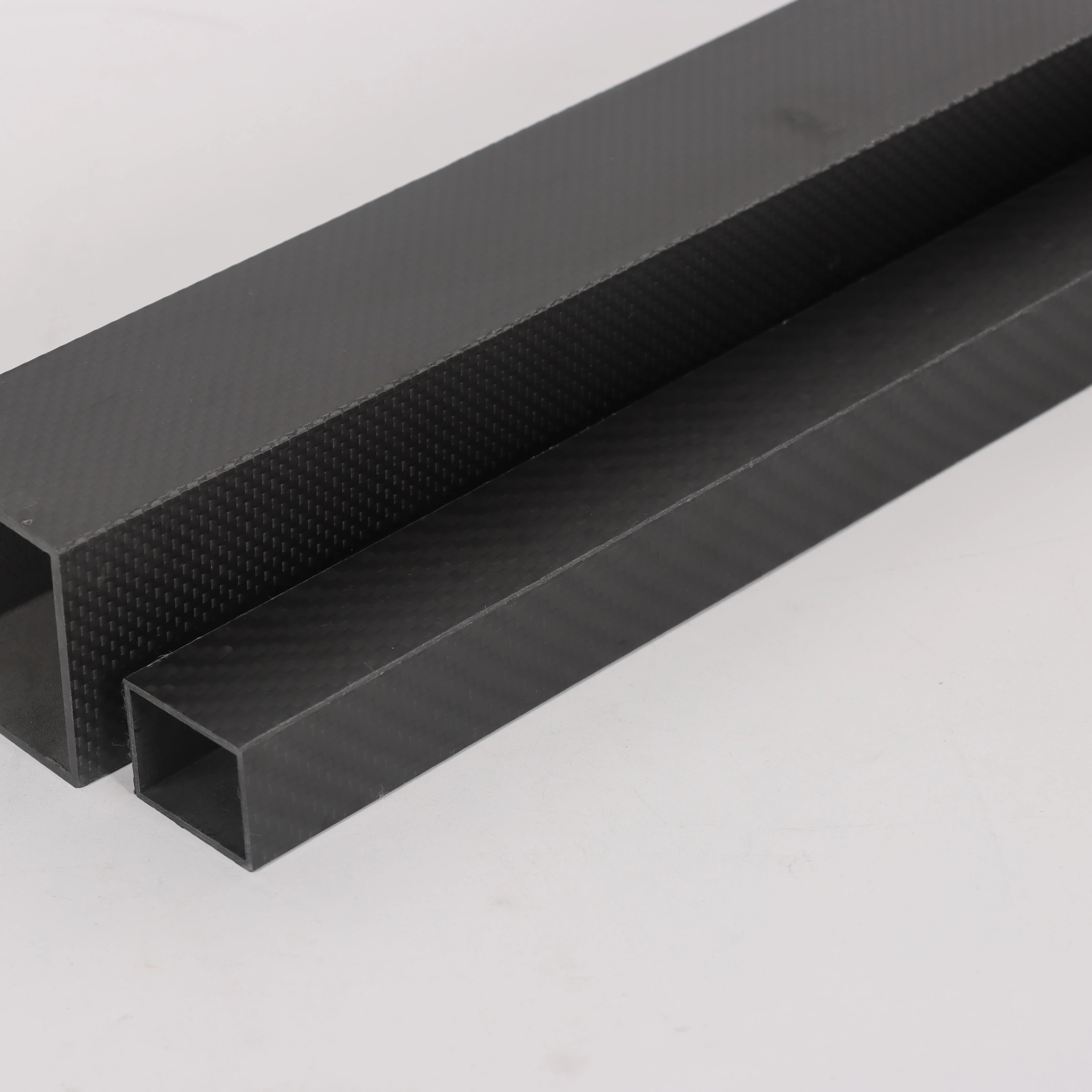
Small square profiles are pultruded, from 1.4 × 1.4 mm up to 10 × 10 mm, with a round or square bore and 1000 mm standard length[2]. Pultruded fibers all run along the length, so they are stiff in bending but weaker across the tube. Larger square and rectangular tubes are roll-wrapped, with plies at several angles and a plain or twill finish, made to your size[3].
What to send for a square or rectangular tube
- Outside size (width × height), wall thickness and length.
- Corner radius, if it matters for your fittings.
- Finish: plain or twill, glossy or matte.
- The main load: bending direction, twisting or clamping.
Send it through the quote form. See also the square carbon fiber tube and pultruded square tube pages.