How do I join carbon fiber to aluminum or steel without galvanic corrosion?
Keep the carbon and the metal from touching electrically, and keep water out of the joint. Carbon fiber conducts electricity and sits at the noble end of the galvanic series, next to gold and platinum[1]. When bare aluminum touches it in wet or salty conditions, the aluminum corrodes. A thin fiberglass layer, an adhesive bond line or a sealant breaks the circuit.
Why does it happen?
Two different conductors in contact, with water or salt spray bridging them, form a battery. The less noble metal (the anode) corrodes to protect the more noble one. Carbon fiber is conductive[2] and very noble, so it acts as a strong cathode, and aluminum, zinc and plain steel are the ones that suffer.
How far apart are the materials?
The anodic index gives each metal a voltage relative to gold (0.00 V). The bigger the difference between two materials in contact, the faster the corrosion. Treat carbon fiber as close to 0.00 V.
| Material | Anodic index (V) | Next to carbon fiber |
|---|---|---|
| Gold (reference; carbon is close to this) | 0.00 | — |
| Titanium, nickel | 0.30 | best choice for fasteners |
| Brass and bronze | 0.40 | isolate in wet conditions |
| Stainless steel, 18% chromium | 0.50 | isolate in wet conditions |
| Aluminum, 2000 series | 0.75 | must isolate |
| Carbon steel | 0.85 | must isolate and coat |
| Aluminum, 6000 and 7000 series | 0.90 | must isolate |
| Zinc, galvanized steel | 1.20–1.25 | avoid contact |
| Magnesium | 1.75 | avoid contact |
Values from Engineers Edge[3], which advises a difference of no more than 0.15 V in harsh environments, 0.25 V in normal indoor storage and 0.50 V in climate-controlled rooms[3].
Voltage gap to carbon fiber (lower is safer)
The joint checklist
- Isolate the faces. Put a fiberglass ply on the carbon surface that meets the metal, or keep a continuous adhesive bond line of at least a few tenths of a millimeter with glass beads or scrim to hold the gap.
- Choose fasteners carefully. Titanium is the safest. Stainless steel is common; use it with sealant or insulating washers outdoors. Avoid zinc-plated and plain steel.
- Seal cut and drilled edges. Machining exposes bare fibers. Coat holes and edges with resin or sealant before assembly.
- Coat the metal. Anodized or painted aluminum is far better than bare. Do not scratch the coating during assembly.
- Keep water out. Design so water drains away from joints, and seal the joint perimeter.
- Use inserts in thin walls. A bonded aluminum or stainless insert spreads clamping load, but it needs the same isolation.
Bond, bolt or both?
| Method | Strength | Corrosion risk | Notes |
|---|---|---|---|
| Adhesive bond (epoxy, acrylic) | high, spreads load | low: the bond line isolates | needs surface prep; hard to take apart |
| Bolted | depends on bearing area | high if bare metal touches carbon | needs washers, sleeves, sealant |
| Bonded and bolted | highest, fail-safe | low with sealant | common on structural joints |
What we can supply
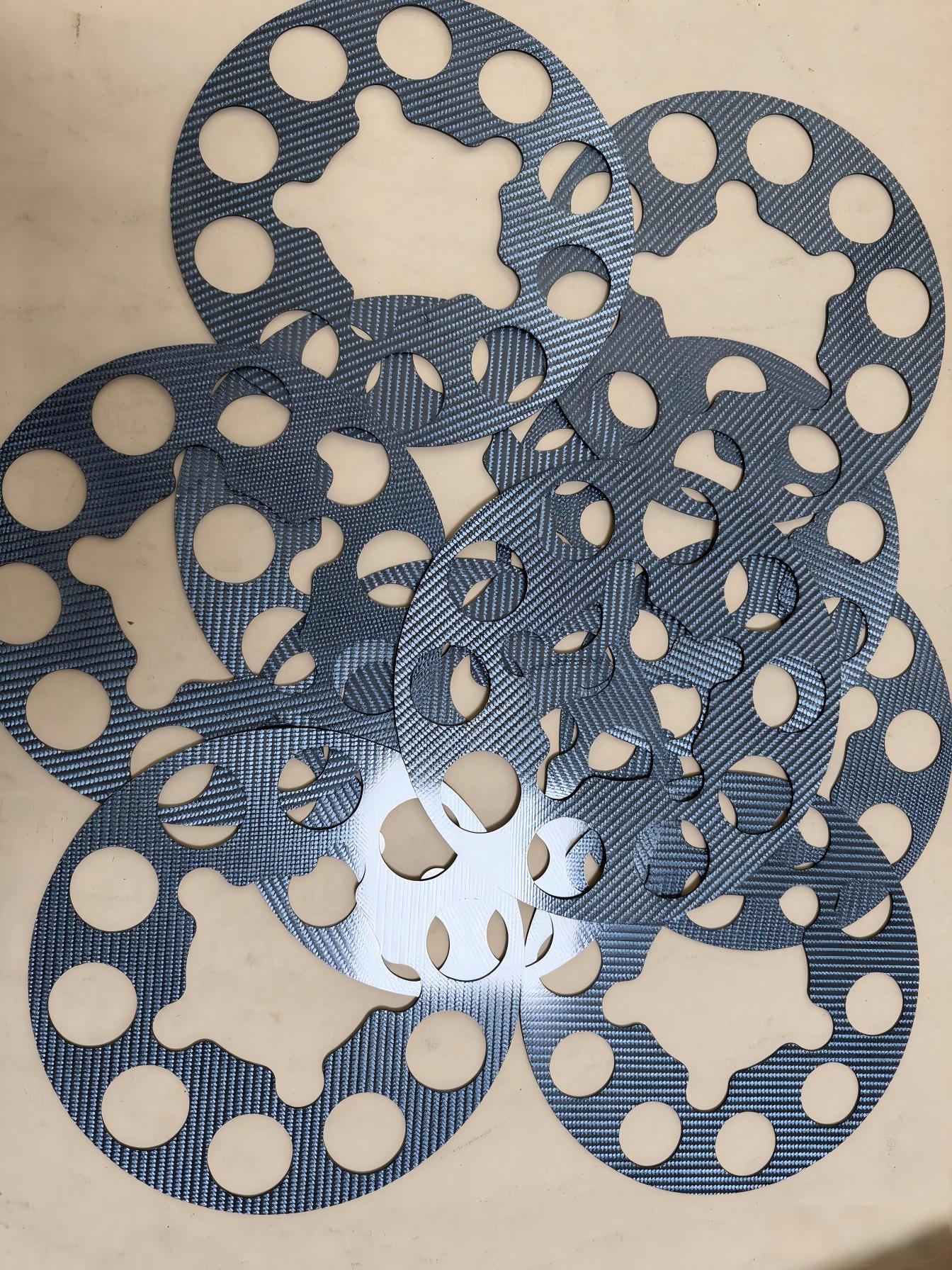
Tubes and sheets can be cut, drilled and CNC machined to your drawing[4]. Mark where metal fittings attach on the drawing so the isolation can be planned with your assembly. Send the drawing through the quote form. See also carbon fiber vs aluminum.
Sources
- Wikipedia, “Galvanic series”: graphite is near the noble (cathodic) end, with platinum and gold
- Carbon fiber woven fabric is thermally and electrically conductive
- Engineers Edge, “Galvanic compatibility”: anodic index values and allowed differences of 0.15, 0.25 and 0.50 V
- Carbon fiber tube: cutting, drilling and CNC machining