
Can I cut, drill and join carbon fiber tube and sheet myself?
For simple cuts and holes, yes. Carbon fiber laminate is abrasive and it splinters where the last layers are not supported, so the method matters more than the machine. The points below are general workshop advice, not a process specification: try them on an offcut first.
How should I cut it?
- Use abrasive tools and sharp cutters. Blunt cutters, deep passes and a part that is not held down firmly all cost accuracy[1].
- Hold the part firmly and support it on both sides of the cut. The less a part moves, the more accurate the cut[2].
- CNC routing and waterjet are the usual machine methods. A laser tends to burn the sheet, because the fiber and the resin need different settings[1].
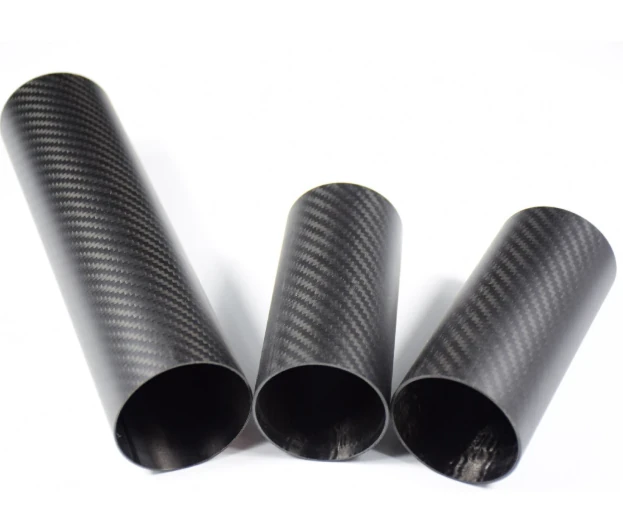
- If you need many pieces at one length, order them cut to length. We supply tubes cut to the customer’s lengths[3].
What about the dust?
Carbon dust is a hazard to breathe and it is conductive. Cut with dust extraction. Where the equipment is made for wet cutting, water keeps the dust down[1]; do not use water with electrical tools that are not made for it. Wear a dust mask and eye protection, and keep the dust away from electronics.
How do I drill without splitting it?
- Drilling composites always carries a risk of fiber blow-out at the hole[2]. Back the part with a sacrificial board and ease the pressure as the drill breaks through.
- In a pultruded tube or rod the fibers run along the length[4]. Support the wall and take extra care when you drill or clamp across it; if the part will be squeezed or clamped hard, ask us about a roll-wrapped tube instead.
- For sheet parts with many holes or slots, send the drawing and have them CNC cut[5].
How do I join it to metal?
- Adhesive bonding is the usual way to fix a metal insert or end fitting. It spreads the load, and it needs surface preparation: follow the adhesive manufacturer’s instructions[6].
- Carbon fiber touching bare aluminum or plain steel can corrode the metal when the joint gets wet. Keep an isolating layer between them, such as the adhesive itself or a glass fiber layer[6].
- Do not rely on a bolt clamping directly on a thin tube wall. Bolted joints need washers or sleeves to spread the load[6].
When should the factory do it?
Many identical parts, tight tolerances, or holes close to an edge: send a drawing through the quote form and we confirm in the quote what can be made. See how to order a custom part.
Sources
- Easy Composites, “How to Precision Cut Carbon Fibre Sheet Using a Desktop CNC Router”: accuracy, dust control and why laser cutting is not suitable (article and the supplier’s answers below it)
- Rock West Composites, “Trim & Machining”: holding the part, and the risk of fiber blow-out when drilling
- Case: custom-length pultruded carbon fiber tubes for a kite maker in Germany
- Carbon fiber tube sizes: roll-wrapped vs pultruded
- What to send to order CNC-cut carbon fiber sheet parts
- Joining carbon fiber to aluminum or steel without galvanic corrosion