Which carbon fiber parts do camera and photography accessory brands use, and how should they be specified?
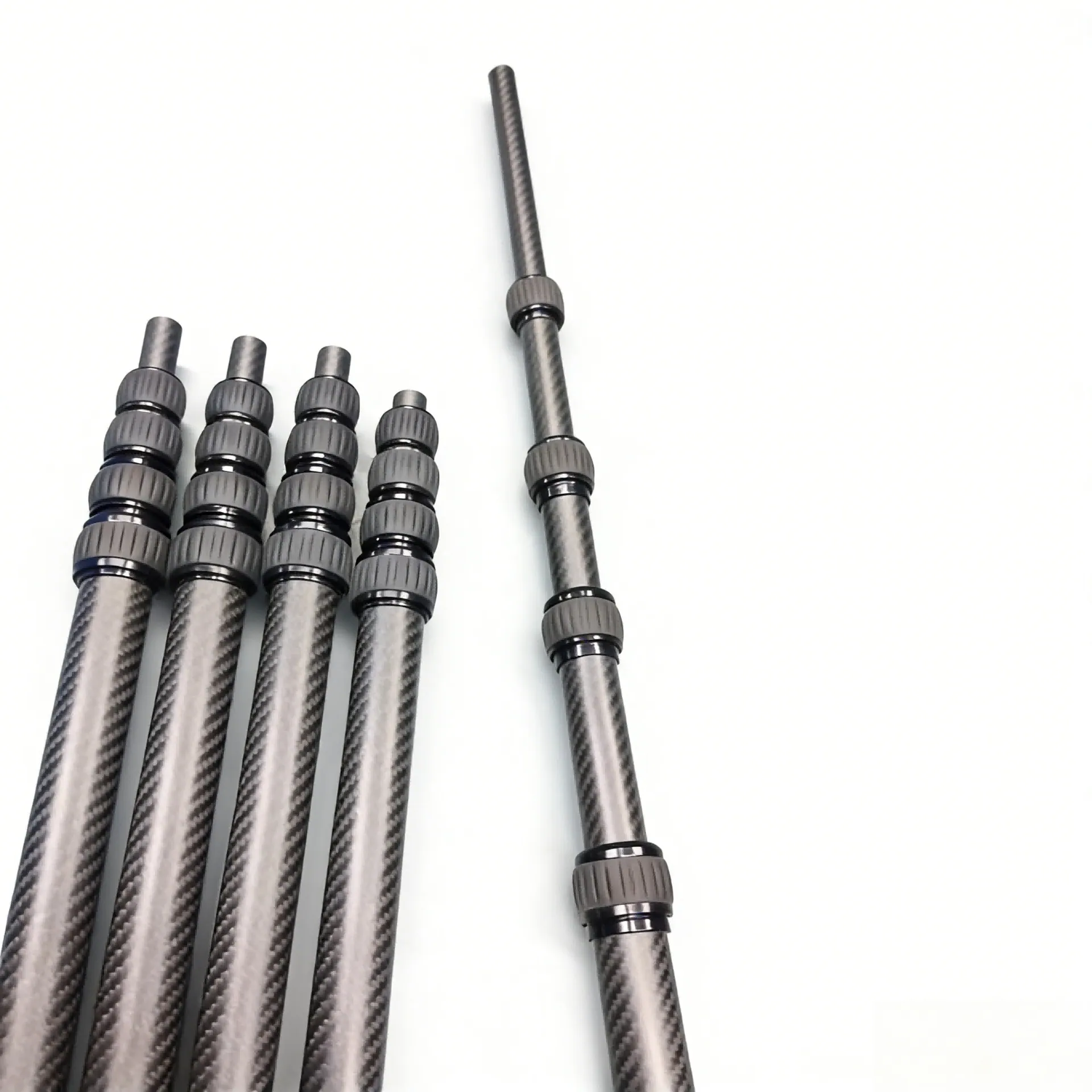
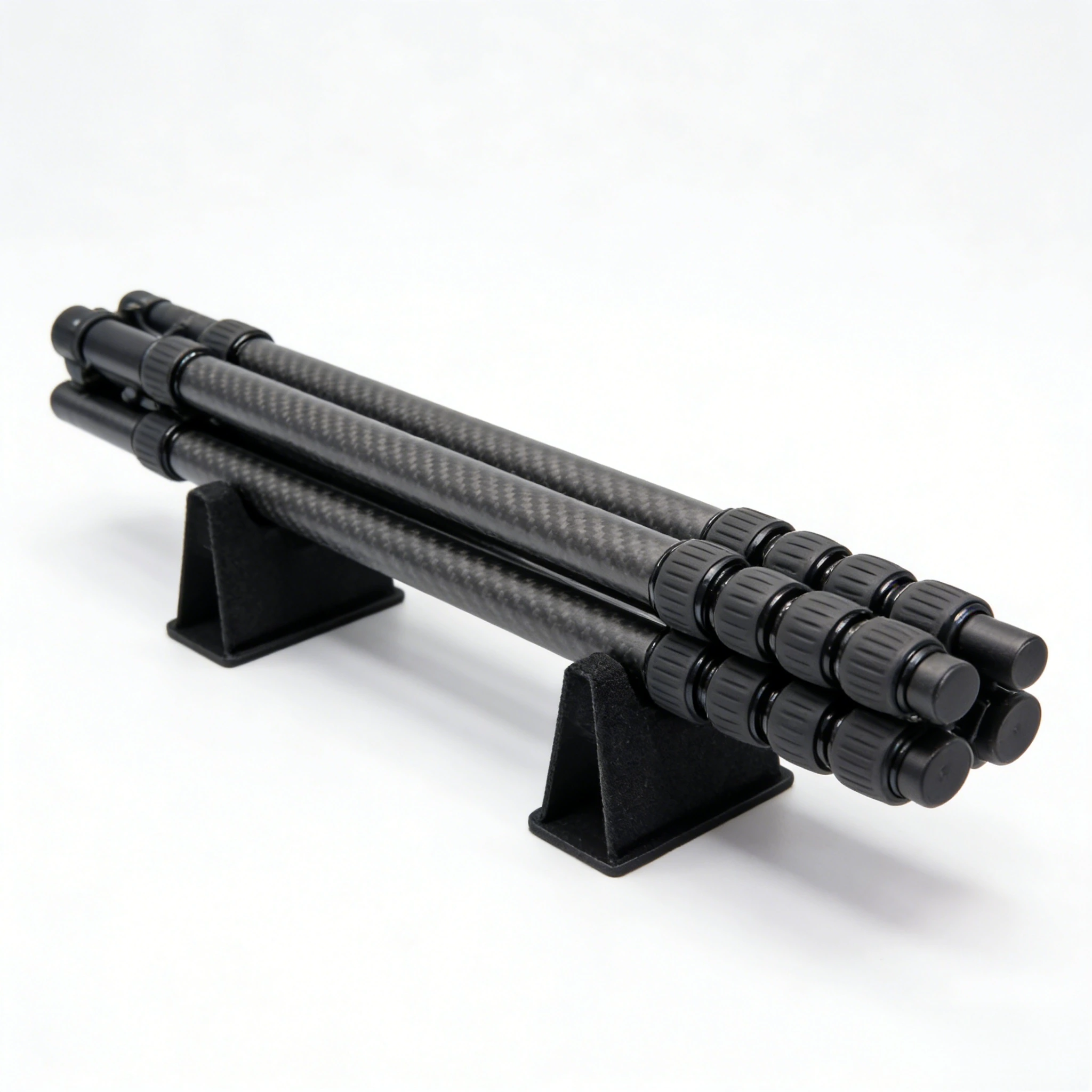
Camera gear uses carbon fiber in three forms. Tripod legs, monopods and extension poles use round or telescopic tubes. Sliders, booms and rigs use tubes or rails. Cages, base plates and mounts are CNC-cut from sheet, often in a full matte finish that does not reflect light[1]. Photography-accessory makers are among our regular buyers[2].
Which part, which carbon form?
| Product | Carbon form | What to specify |
|---|---|---|
| Tripod legs | roll-wrapped round tubes, telescoping sizes | OD/ID of each section, length, lock type, finish |
| Monopods, extension and pole-cam poles | telescopic poles | extended and closed length, sections, tip thread |
| Sliders and rails | round tubes in pairs, or square tubes | OD, straightness, length, end-cap design |
| Booms and jib arms | large round or square tubes | length, load at the tip, joint design |
| Camera cages, base plates, mounts | CNC-cut sheet | thickness, finish on each face, DXF drawing |
| Drone camera mounts and gimbal plates | thin CNC-cut sheet | thickness, hole pattern, vibration needs |
Which finish should I choose?
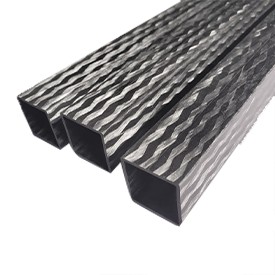
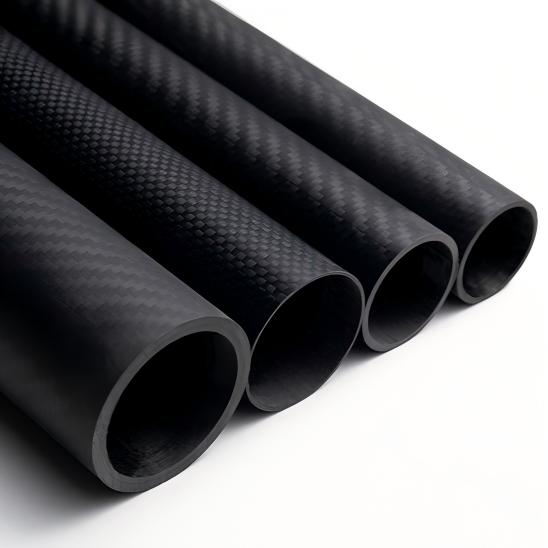
Carbon sheets come glossy, five-point matte or full matte[1]. Tubes come glossy or matte, plain or twill[3].
| Finish | Look | Good for |
|---|---|---|
| Glossy | deep, reflective weave | premium visible parts away from the lens |
| Five-point matte | soft sheen, hides fingerprints | handles, legs, grips |
| Full matte | flat, no reflections | cages, plates and parts near the lens or in the frame |
Why carbon fiber for camera gear?
- Weight. A carbon laminate is about 1.6 g/cm³ against 2.7 g/cm³ for aluminum[4], which matters for travel tripods, handheld rigs and drone payloads.
- Stiffness and damping. Stiff tubes settle quickly after you touch the camera, which keeps long exposures and long lenses sharp.
- Feel in the cold. Carbon does not feel as cold to the touch as aluminum in winter.
- Dimensional stability. Carbon barely expands with temperature, so slider rails stay true from morning to midday[4].
Which sizes are standard?
Round tubes run from 6/4 to 20/18 mm in 500 or 1000 mm lengths[3]; telescopic poles and other tube sizes are made to order[5]. Standard sheets run from 1 to 5 mm; custom sheets from 0.2 to 150 mm[1]. Sheet thickness for plates is covered in how thick a carbon sheet should be, and pole specs in custom telescopic poles.
What to send
Product type, drawings (STEP or DXF), finish, logo method and quantities. Samples ship in 5–7 days and bulk orders take about 30 days[6]. Use the quote form.
Sources
- Carbon fiber sheet: glossy, five-point matte or full matte finish; standard 1–5 mm; custom 0.2–150 mm
- Catalogue: buyers include photography-accessory makers
- Carbon fiber tube: standard sizes 6/4 to 20/18 mm, 500 or 1000 mm; glossy or matte, plain or twill
- DragonPlate, “Carbon Fiber vs Aluminum”: densities and thermal expansion
- Carbon fiber telescopic pole: size customized; used for photography among other uses
- Samples 5–7 days, bulk about 30 days