Which unidirectional carbon fiber fabric should I use to strengthen concrete beams, slabs and columns?
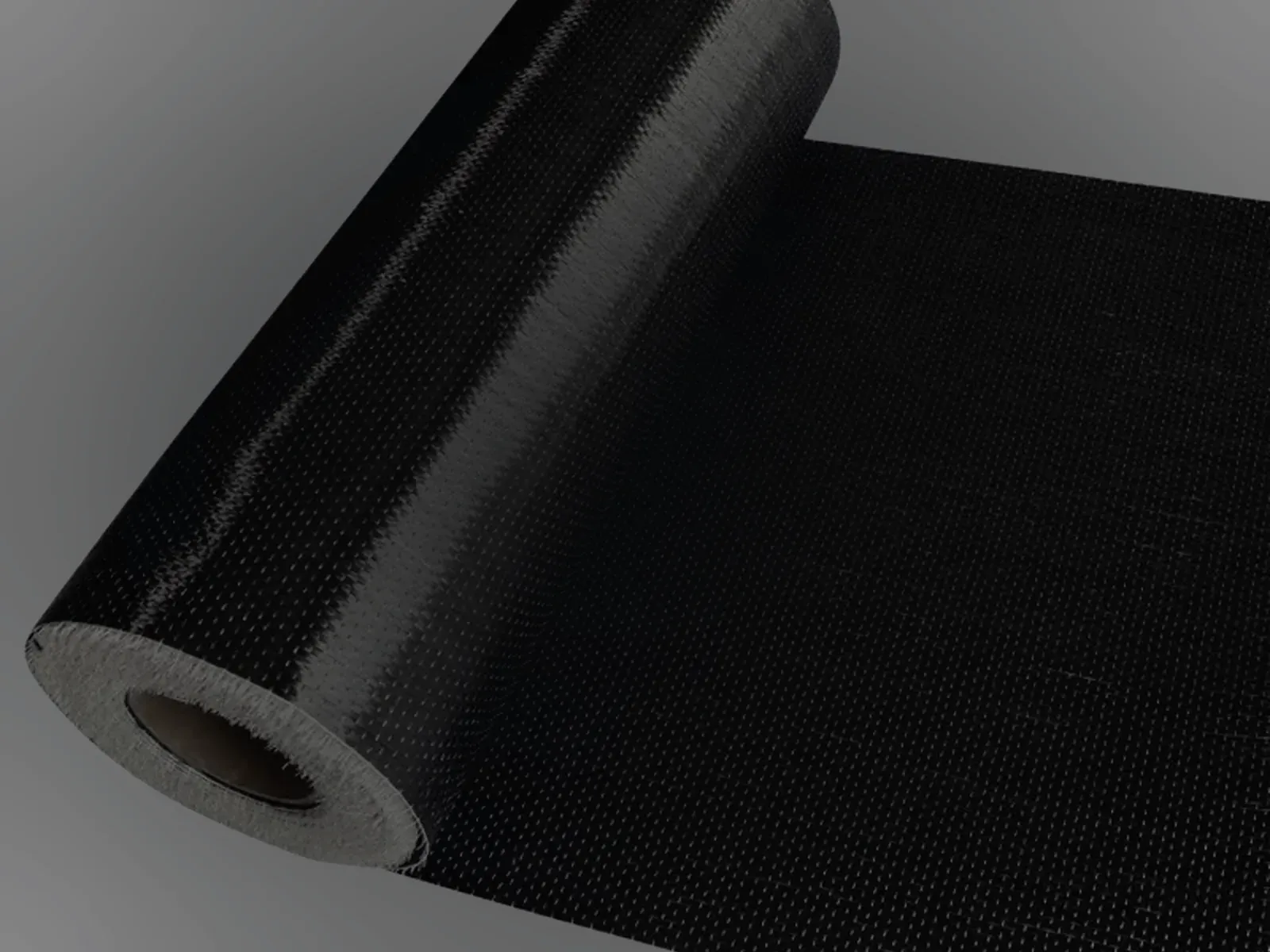
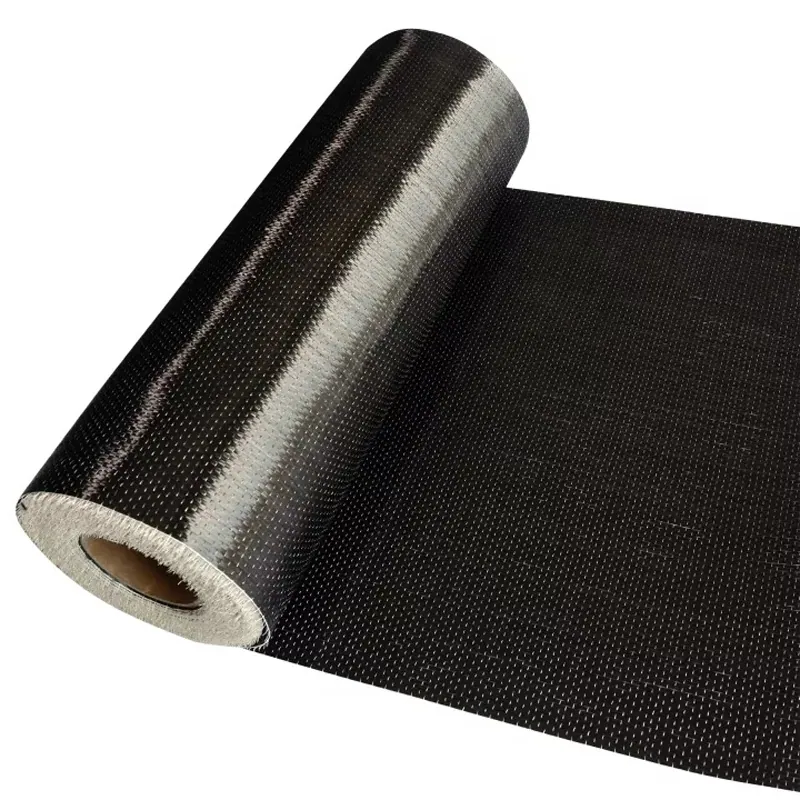
Choose the fiber grade by the strength your design needs and the fabric weight by how much fiber you need per layer. Our unidirectional fabrics come in T300 grade (4,500–4,700 MPa fiber strength, 230 GPa) and T700 grade (4,900 MPa, 240 GPa), at 400 or 600 g/m²[1][2][3][4]. A 600 g/m² layer carries 50% more fiber than a 400 g/m² layer, so you need fewer layers.
Where is carbon fiber wrap used?
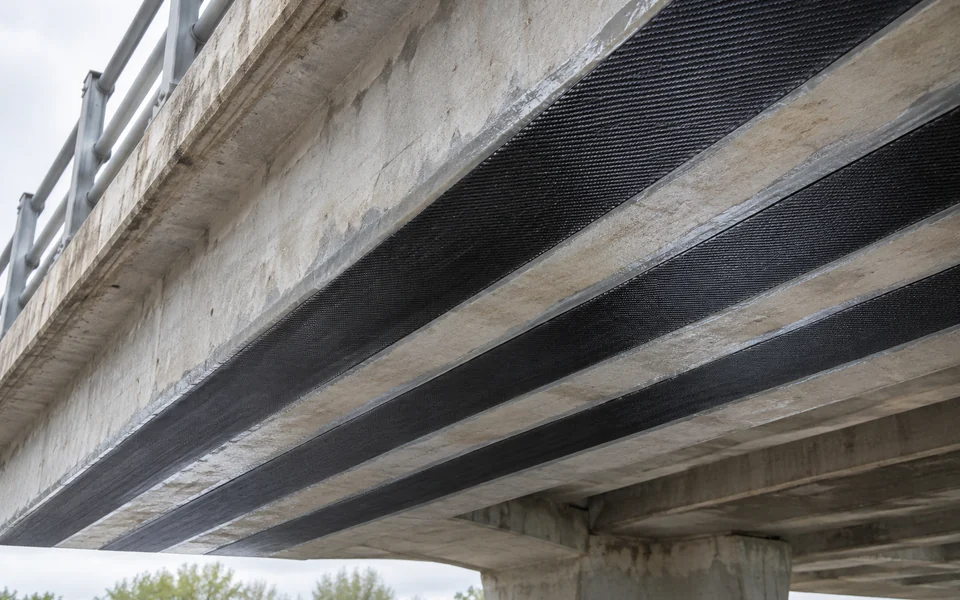
Carbon fiber strengthening is used to raise load capacity, to compensate for new slab openings or removed walls, beams or columns, for seismic, wind or blast retrofit, to restore members damaged by fire, impact or corrosion, and to fix design or construction defects[5].
How do the four fabrics compare?
| Fabric | Grade | Weight (g/m²) | Fiber | Tensile strength (MPa) | Modulus (GPa) | Elongation (%) |
|---|---|---|---|---|---|---|
| CR12U-400II | T300 | 400 ± 5% | 12K | 4,500 | 230 | 1.9 |
| CR24U-600II | T300 | 600 ± 5% | 24K | 4,700 | 230 | 1.9 |
| CR12U-400I | T700 | 400 ± 5% | 12K | 4,900 | 240 | 2.0 |
| CR24U-600I | T700 | 600 ± 5% | 24K | 4,900 | 240 | 2.0 |
Fiber values from each fabric’s technical data sheet[1][2][3][4]. Width tolerance is ± 2 mm.
Fiber tensile strength (MPa)
What thickness do I use in the calculation?
Design codes for bonded carbon strengthening usually work with the nominal fiber thickness: fabric weight divided by fiber density. With carbon fiber at 1.80 g/cm³[6]:
| Fabric weight | Nominal fiber thickness per layer |
|---|---|
| 400 g/m² | 400 ÷ 1.80 ÷ 1000 = 0.222 mm |
| 600 g/m² | 600 ÷ 1.80 ÷ 1000 = 0.333 mm |
Use the design strength and strain your code sets for the system (fabric plus resin), not the raw fiber values. Common references are ACI 440.2R in the United States and GB 50367 in China[7][8].
How is it installed?
- Repair and grind the concrete surface; round sharp corners before wrapping columns.
- Apply primer, then fill voids with putty.
- Roll on the saturating epoxy.
- Lay the fabric with fibers in the design direction and roll it out to remove air.
- Apply the next coat and further layers as designed, then protect the surface if needed.
How should I store the fabric?
Keep rolls in a cool, dry place, out of direct sunlight and away from damp. Store them flat, not pressed or bent, because crushed fibers lose strength[1]. More detail in how to store carbon fiber fabric and prepreg.
What to send for a quote
Grade (T300 or T700), weight (400 or 600 g/m²), roll width, total square meters and the resin you will use. Request the datasheets through the quote form.
Sources
- Technical data sheet, T300 unidirectional fabric CR12U-400II: 400 g/m² ± 5%, SYT45S-12K, 4,500 MPa, 230 GPa, 800 g/km, 1.9%; use with matching carbon fiber adhesive; storage instructions
- Technical data sheet, T300 unidirectional fabric CR24U-600II: 600 g/m² ± 5%, SYT45S-24K, 4,700 MPa, 230 GPa, 1,600 g/km, 1.9%
- Technical data sheet, T700 unidirectional fabric CR12U-400I: 400 g/m² ± 5%, SYT49S-12K, 4,900 MPa, 240 GPa, 2.0%
- Technical data sheet, T700 unidirectional fabric CR24U-600I: 600 g/m² ± 5%, SYT49S-24K, 4,900 MPa, 240 GPa, 2.0%
- Unidirectional carbon fiber product page: strengthening for load capacity, openings and removed members, seismic, wind or blast retrofit, fire or impact damage, corrosion, design or construction defects
- Carbon fiber density 1.80 g/cm³
- American Concrete Institute, ACI 440.2R: Guide for the Design and Construction of Externally Bonded FRP Systems for Strengthening Concrete Structures
- GB 50367-2013, Code for design of strengthening concrete structure (Ministry of Housing and Urban-Rural Development of China)