How do I calculate the weight of a carbon fiber tube, sheet or fabric roll?
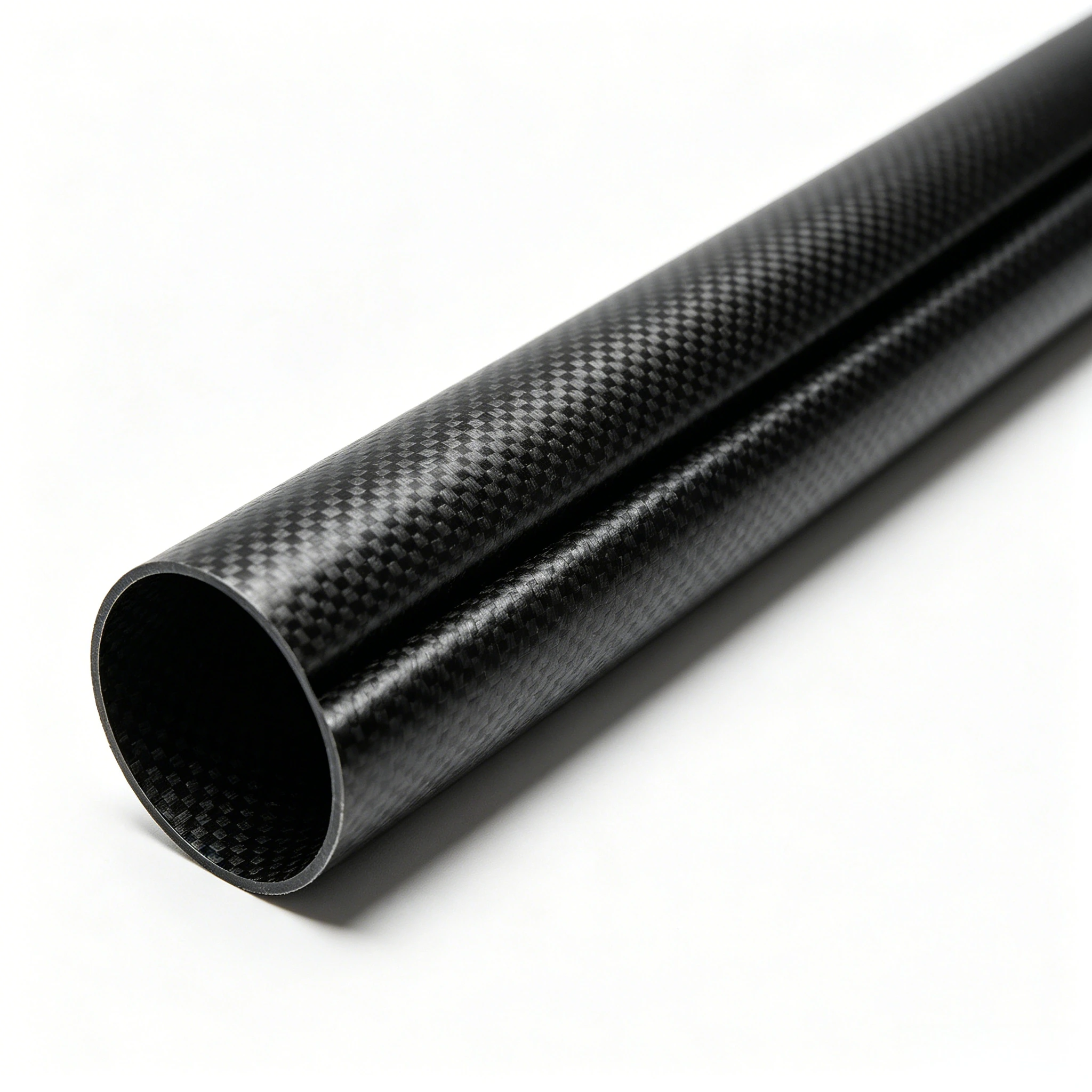
Weight is volume times density. For cured carbon fiber laminates, use about 1.6 g/cm³[1]. Our 600 g twill prepreg confirms it: 1,034 g/m² at 0.65 mm per ply works out to 1.59 g/cm³[2]. So a 1000 × 1000 × 2 mm carbon sheet weighs about 3.2 kg, and a 20/18 mm tube about 95 g per meter.
The three formulas
| Item | Formula | Units |
|---|---|---|
| Round tube | weight (g) = π ÷ 4 × (OD² − ID²) × length × density ÷ 1000 | mm, mm, g/cm³ |
| Sheet | weight (g) = length × width × thickness × density ÷ 1000 | mm, g/cm³ |
| Fabric roll | weight (kg) = areal weight × width × roll length ÷ 1000 | g/m², m, m |
Our weight calculator does the tube and fabric versions for you[3].
Worked example: a sheet
A 500 × 500 × 3 mm sheet: 500 × 500 × 3 = 750,000 mm³ = 750 cm³. 750 × 1.6 = 1,200 g, so about 1.2 kg.
| Standard 3K T300 sheet[4] | 1 mm | 2 mm | 3 mm | 4 mm | 5 mm |
|---|---|---|---|---|---|
| 500 × 500 mm | 0.40 kg | 0.80 kg | 1.20 kg | 1.60 kg | 2.00 kg |
| 600 × 500 mm | 0.48 kg | 0.96 kg | 1.44 kg | 1.92 kg | 2.40 kg |
| 800 × 800 mm | 1.02 kg | 2.05 kg | 3.07 kg | 4.10 kg | 5.12 kg |
| 1000 × 1000 mm | 1.60 kg | 3.20 kg | 4.80 kg | 6.40 kg | 8.00 kg |
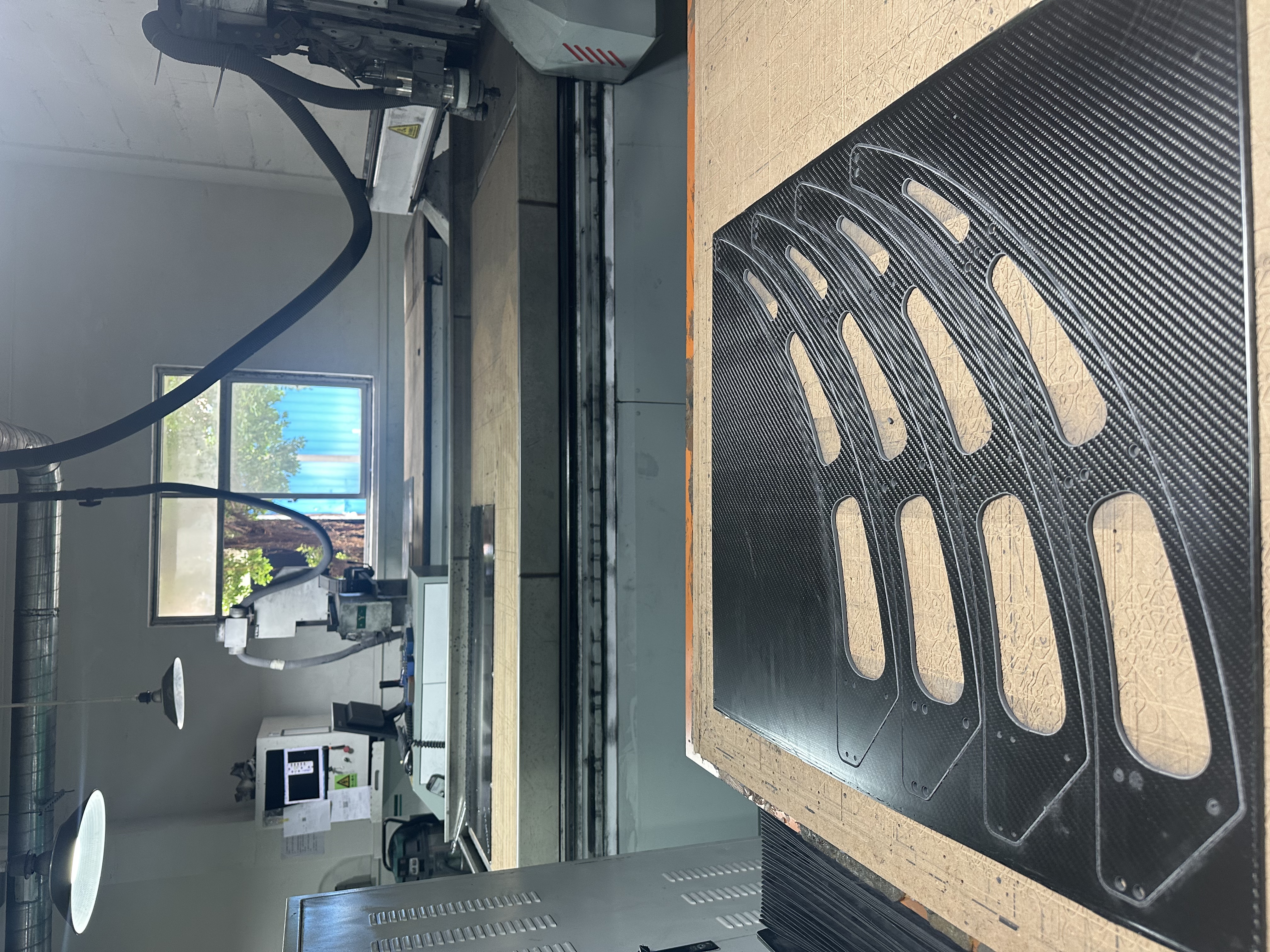
1000 × 1000 mm sheet weight by thickness
Worked example: a tube
A 16/14 mm tube, 1000 mm long: π ÷ 4 × (256 − 196) = 47.1 mm² cross-section. 47.1 × 1000 = 47,100 mm³ = 47.1 cm³. 47.1 × 1.6 = 75 g.
| Standard tube (OD/ID, mm)[5] | Weight per meter |
|---|---|
| 6/4 | 25 g |
| 8/6 | 35 g |
| 10/8 | 45 g |
| 12/8 | 101 g |
| 14/12 | 65 g |
| 16/14 | 75 g |
| 16/12 | 141 g |
| 20/18 | 95 g |
Worked example: a fabric roll
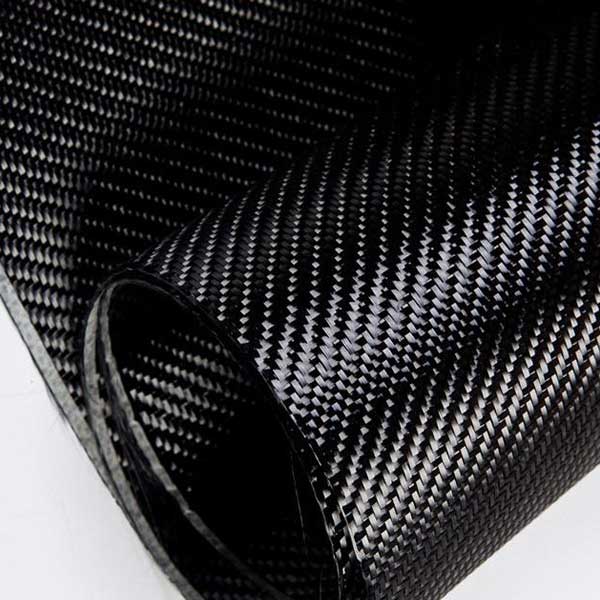
200 g/m² 3K fabric, 1 m wide[6], 100 m roll: 200 × 1 × 100 ÷ 1000 = 20 kg of fabric, plus the core and packaging.
Why might a real part weigh a little more or less?
- Resin content: more resin adds weight and thickness, while density drops slightly, because epoxy is lighter than carbon fiber.
- Thickness tolerance: a nominal 2 mm sheet can be slightly thicker or thinner.
- Foam or wood cores make sandwich panels much lighter than solid carbon.
Ask for the measured weight of a sample if you need exact figures. Send sizes and quantities through the quote form and we will include gross and net weights.
Sources
- DragonPlate, “Carbon Fiber vs Aluminum”: carbon fiber composite density about 1.6 g/cm³
- Technical data sheet, 600 g twill carbon prepreg: areal weight 1,034 ± 5 g/m², 0.65 mm per ply (available on request)
- Fabric and tube weight calculator
- Standard carbon fiber sheets: 3K T300, 500 × 500 to 1000 × 1000 mm, 1–5 mm
- Carbon fiber tube standard sizes CFT001 to CFT014
- Carbon fiber woven fabric: 200 g/m² 3K, 1000 mm wide (CY03P-200, CY03T-200)
- Packaging: cartons or pallets (sales team)