Which fiberglass roving do I need: direct or assembled, and for which process?
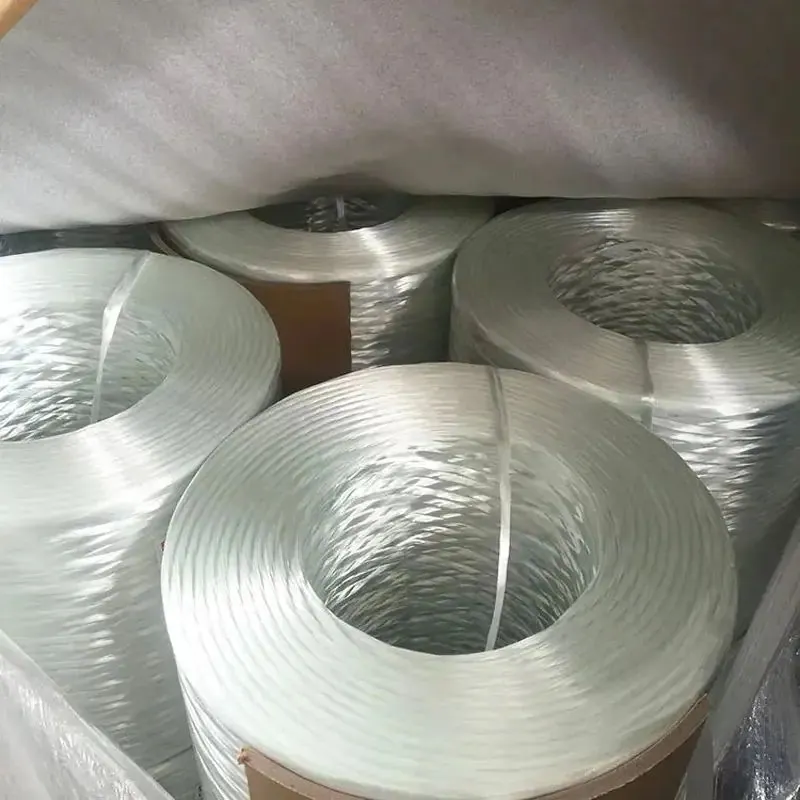
Choose by process. Direct roving is a single continuous strand wound into a package, used where the fiber stays continuous: weaving, filament winding and pultrusion[1]. Assembled roving is many fine strands wound together, made to be chopped: SMC, spray-up, chopped strand mat, translucent panels and thermoplastic compounding[2][3][4]. Then match the sizing to your resin.
Which roving for which process?
| Process | Roving type | Resin compatibility | What the roving is designed for |
|---|---|---|---|
| Weaving, multiaxial fabrics, filament winding, pultrusion | direct roving | UP, VE, epoxy | good weavability; for roving cloth, combination mats, stitched mats, multiaxial fabric, geotextiles, molded grating[1] |
| SMC (sheet molding compound) | assembled roving for SMC | UP, VE | good dispersion after chopping, low fuzz, fast wet-out, low static, high glass content, good surface[2] |
| Spray-up | assembled roving for spray-up | UP, VE | low static, good dispersion and wet-out, good runnability through the gun[3] |
| Thermoplastic granules (twin-screw) | assembled roving for thermoplastics | PA, PBT, PET, PP, ABS, AS, PC | high permeability with PP; for automotive, electrical and railway fastening parts[4] |
| Chopped strand mat | assembled roving, E6 glass, 12 µm, size 512 | UP | good choppability and dispersion for powder and emulsion mats, soft mats; boat hulls and sanitary ware[5] |
| Translucent FRP panels | assembled panel roving | UP | twist-free, silane sizing, for continuous transparent panel lines[6] |
| Prepreg (sports and aviation) | ECR roving, 2400 tex | epoxy, polyimide, BMI, phenolic | helicopter parts, golf clubs, badminton posts, fishing poles[7] |
UP = unsaturated polyester, VE = vinyl ester.
What does tex mean?
Tex is the weight in grams of 1,000 m of roving. A 2400 tex roving weighs 2.4 kg per kilometer; 4800 tex weighs twice that[5]. Higher tex lays down more glass per pass, so it suits fast, heavy processes; lower tex gives finer fabrics and more even chopping.
Roving weight per kilometer
Why does the right type matter?
- Direct roving in a chopper chops poorly and gives uneven glass distribution.
- Assembled roving on a loom or pultrusion line fuzzes and breaks, because its many fine strands are not bonded into one.
- The wrong sizing wets out slowly or bonds weakly in your resin, which shows up as dry spots or low strength.
What to send
Process, resin, tex, filament diameter if known, package weight, and monthly tonnage. The assembled roving for chopped mat has a 1,000 kg minimum order[5]. Use the quote form. For AR (alkali-resistant) roving for concrete, see AR glass fiber for GRC.
Sources
- Direct roving for weaving: UP, VE and epoxy; roving cloth, combination mats, stitched mat, multiaxial fabric, geotextiles, molded grating; filament winding, weaving, texturizing, pultrusion
- E-glass assembled roving for SMC: UP and VE; good dispersion after chopping, low fuzz, fast wet-out, low static, high glass content, good surface
- E-glass assembled roving for spray-up: UP and VE; low static, good dispersion and wet-out, good runnability
- E-glass assembled roving for thermoplastics: PA, PBT, PET, PP, ABS, AS, PC; twin-screw extrusion; railway fastening, automotive, electrical and electronic parts
- Assembled roving for chopped strand mat: E6 glass, 12 µm, 2400 and 4800 tex, size code 512; boat hulls and sanitary ware; MOQ 1,000 kg
- E-glass assembled panel roving: twist-free, silane sizing, UP, continuous FRP transparent panels
- ECR roving for prepreg, 2400 tex: epoxy, polyimide, bismaleimide, phenolic; helicopters, golf clubs, badminton posts, fishing poles